

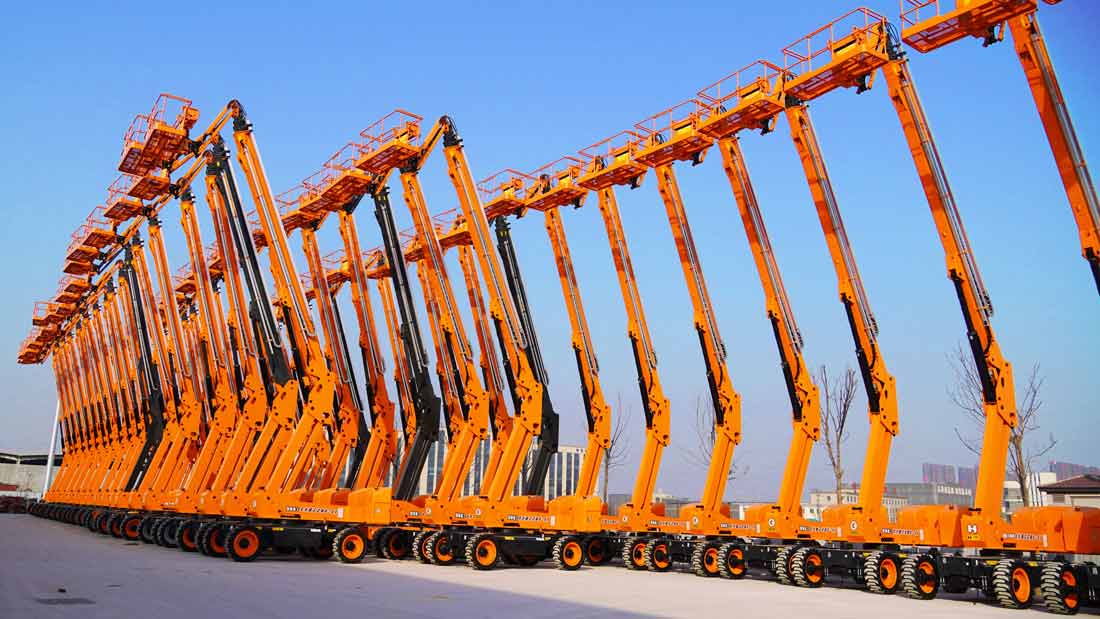
A self-propelled scissor lift platform uses an integrated drive system and lifting mechanism to move workers, tools and materials vertically to a required working height. Its main components typically include:
Platform: The elevated work area with guardrails, entry gate and, on many models, an extension deck.
Scissor mechanism: Crossed steel arms that expand to raise the platform and retract to lower it.
Hydraulic system: Hydraulic cylinders, hoses and a pump that provide lifting force.
Chassis: The lower frame that supports the machine, batteries or engine, hydraulic components and control systems.
Drive system: Electric or hydraulic motors that power the wheels or tracks for self-propelled travel.
Control system: Platform and ground controls used to drive, steer, raise, lower and stop the machine.
Safety devices: Features such as emergency stop buttons, tilt alarms, pothole protection and overload protection, depending on the model.
How the Scissor Mechanism Raises the Platform
The lifting action begins when the operator activates the lift control from the platform control box. The hydraulic pump sends pressurized hydraulic oil to the lift cylinders. As the cylinders extend, they push the connected scissor arms apart.
The crossed arms open in a controlled motion, raising the platform vertically. As the scissor structure extends, the platform reaches the selected working height while remaining supported by the chassis below.
To lower the platform, the operator activates the down control. Hydraulic oil is released in a controlled manner, allowing the cylinders to retract. The scissor arms fold inward, and the platform descends smoothly to its stowed position.
This vertical lifting design makes scissor lifts especially effective for work directly above the machine, such as ceiling installation, electrical work, maintenance, racking access and interior construction.
How Self-Propelled Travel Works
A self-propelled scissor lift platform has built-in motors that allow it to travel without being pushed, towed or loaded onto another vehicle for short-distance repositioning. The operator uses the joystick or directional controls on the platform to move the lift forward, reverse or steer.
On electric scissor lifts, rechargeable batteries power the drive motors. These models are commonly used indoors because they operate quietly and produce no exhaust emissions at the point of use.
Diesel or engine-powered scissor lifts are often designed for outdoor projects and rougher ground conditions. They may offer stronger traction, higher ground clearance and improved climbing ability for demanding construction sites.
Before driving, operators should confirm that the travel route is clear, the ground is suitable and the lift is operated within the manufacturer’s permitted travel height and slope limits.
Platform Controls and Ground Controls
Most self-propelled scissor lift platforms have two control stations:
Platform Controls
Platform controls allow the operator to manage the lift while standing inside the guardrails. Typical functions include:
Raising and lowering the platform
Driving forward and reverse
Steering left and right
Selecting drive or lift functions
Operating the extension deck, where fitted
Activating the emergency stop button
Platform controls help operators position themselves close to the work area, reducing unnecessary movement and improving task efficiency.
Ground Controls
Ground controls are located on the lower chassis. They allow trained personnel to raise or lower the platform from ground level and are important for inspections, maintenance and emergency procedures.
The ground control station may also include an emergency lowering function. Operators and site supervisors should understand these controls before using the equipment.
How the Hydraulic System Delivers Lifting Power
The hydraulic system is the core lifting system of a scissor lift platform. It typically includes a hydraulic pump, oil tank, valves, cylinders and hoses.
When the lift command is activated, the pump creates hydraulic pressure and directs oil to the lift cylinders. The cylinders convert this pressure into mechanical force, extending to open the scissor arms and raise the platform.
Control valves regulate the flow of hydraulic oil to ensure smooth lifting and lowering. Safety valves may also help prevent uncontrolled platform descent in the event of a hydraulic issue.
Regular inspection of hydraulic hoses, fittings, cylinders and oil levels is essential for reliable scissor lift operation.
Safety Systems During Operation
Self-propelled scissor lifts use several safety systems to help protect operators and equipment. The specific features vary by model, but common functions include:
Emergency stop buttons: Stop lift and drive functions quickly when needed.
Tilt alarms: Alert the operator when the machine is on excessive slope or uneven ground.
Pothole protection: Lowers protective bars or mechanisms when the platform is raised to improve stability on certain models.
Overload protection: Warns or prevents lifting when the platform load exceeds the rated capacity.
Guardrails and gates: Help prevent falls from the elevated platform.
Emergency lowering: Enables the platform to be lowered from the ground in an emergency.
Battery charge indicators: Help operators monitor available power on electric models.
These systems support safe operation, but they do not replace proper operator training, pre-use inspections and compliance with local safety requirements.
Operating Sequence for a Self-Propelled Scissor Lift
A typical operating process includes the following steps:
Inspect the machine for visible damage, leaks, loose components or safety concerns.
Check the work area for overhead obstructions, uneven surfaces, holes, slopes and nearby personnel.
Confirm that the platform load, including people, tools and materials, is within the rated capacity.
Enter the platform and secure the entry gate.
Release the emergency stop and select the required operating function.
Drive the lift to a suitable position on firm, level ground.
Raise the platform to the required working height.
Complete the task while keeping tools and materials safely organized on the platform.
Lower the platform fully before travelling or leaving the machine, unless the manufacturer specifically permits travel at the selected height.
Park the lift in a safe location, switch it off and recharge the batteries or refuel it as required.
Choosing the Right Self-Propelled Scissor Lift Platform
The right self-propelled scissor lift depends on the working environment and access requirements. Key selection factors include working height, platform capacity, platform size, indoor or outdoor use, power source, terrain conditions and transport dimensions.
Electric scissor lifts are a practical choice for smooth indoor surfaces and low-emission workplaces. Rough-terrain or crawler scissor lift platforms are better suited to uneven outdoor ground, while high-capacity models can support more demanding construction and industrial work.
Selecting a scissor lift platform that matches the application helps improve productivity, provide stable elevated access and support efficient work at height.